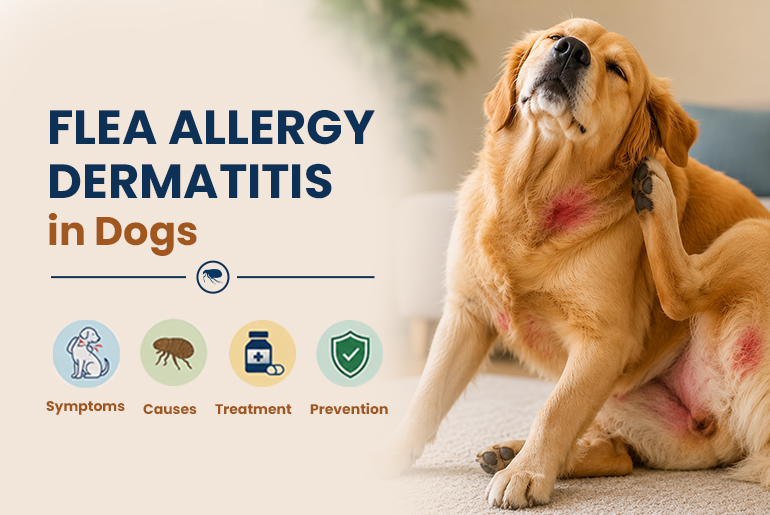
Your dog may have immaculate fur and coat with a healthy lifestyle. But if you notice them constantly scratching or biting their skin, which is more than occasional itching, you have to look beyond the obvious. Have you found fleas? These tiny parasites are a nuisance for pets, and it’s very frustrating for both the pet and their parents as fleas may also cause flea allergy dermatitis. This blog will help you understand flea allergy dermatitis in dogs, its signs, causes, treatments to help your dog stay comfortable, and how to prevent recurring flare-ups.
What is Flea Allergy Dermatitis (FAD) in Dogs?
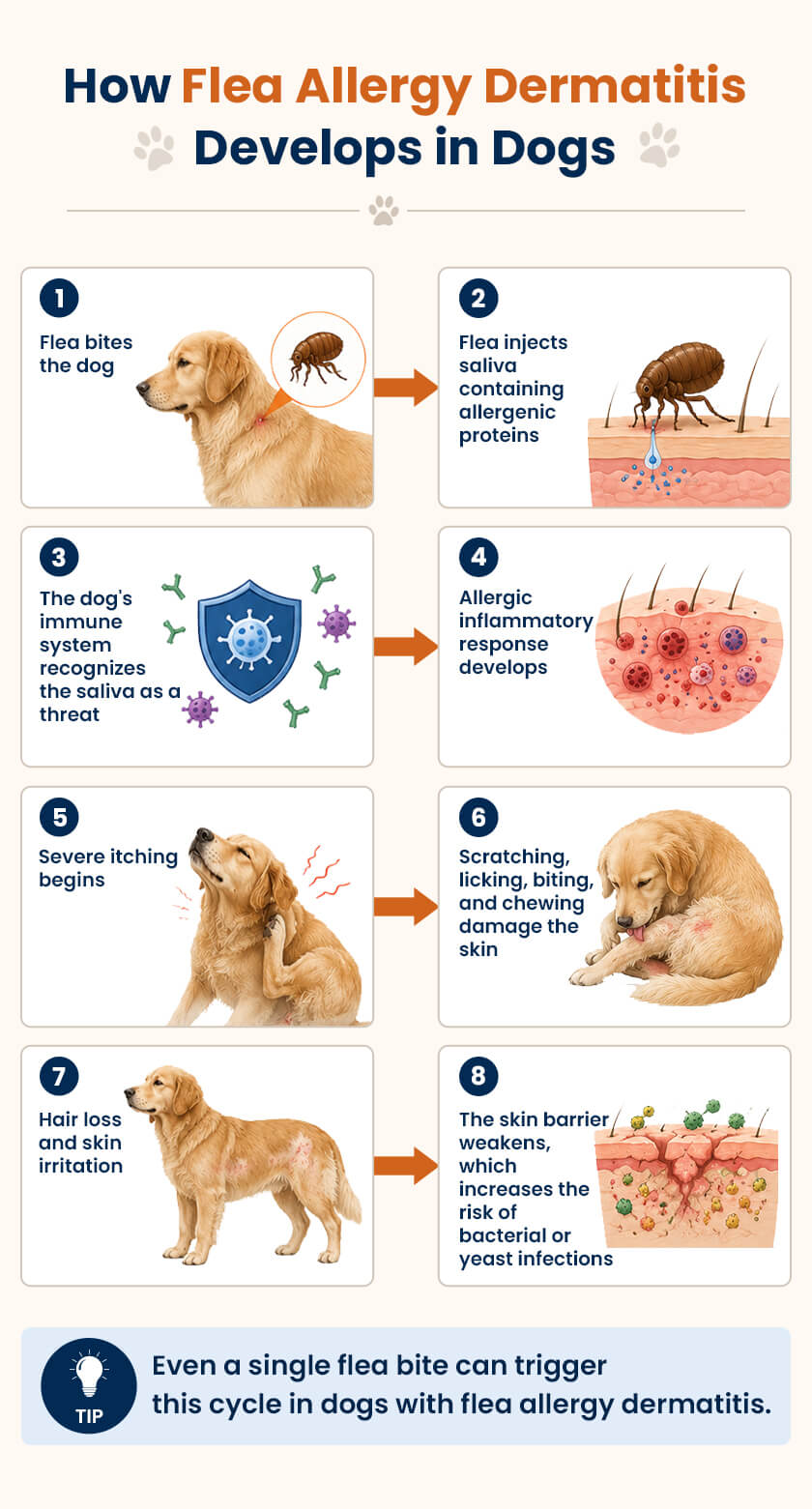
Flea allergy dermatitis is a hypersensitivity disorder in which the affected dog is sensitive to the flea saliva. When a flea bites a dog to feed on their blood, it injects saliva into the dog’s skin. In allergic dogs, the immune system overreacts to the specific antigen present in the flea saliva, which triggers intense itching and inflammation. FAD is one of the most common hypersensitivity skin conditions in dogs worldwide.
Importantly, dogs with FAD do not have to be heavily infested with fleas to be itchy; even a single flea bite can trigger days of intense itching.
Signs Your Dog Has Flea Allergy Dermatitis
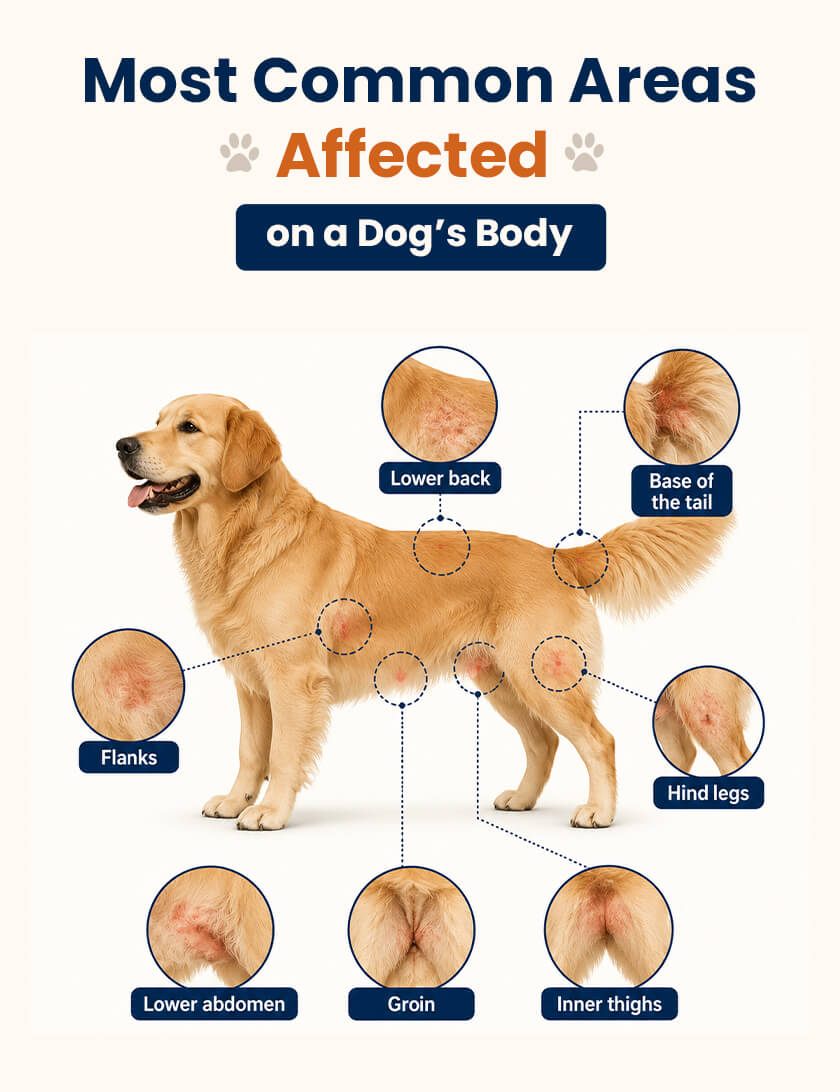
FAD signs often appear quickly after flea exposure and tend to worsen if not treated on time. Here are some clinical signs of FAD:
- Restlessness and discomfort
- Intense itching, scratching, licking, rubbing, and even chewing the skin
- Hair loss, especially from the middle of the back to the tail base and down to the rear legs
- Crusted, itchy skin over the hips, base of the tail, and thighs
- Scabbing and secondary infections
- Thickening and darkening of skin color in chronic cases
- Secondary bacterial or yeast infections
- Severe flea infestations may occasionally lead to anemia
An unbearable itch can make your dog consistently scratch and bite the skin, which damages the skin barrier and allows secondary skin infections or inflammation to grow.
Causes of Flea Allergy Dermatitis in Dogs
The root cause of flea allergy dermatitis is an immune hypersensitivity reaction to the specific antigen in the flea saliva.
However, here are some of the factors that contribute to the severity of FAD in dogs.
1. Flea Exposure
The major reason is flea exposure. Most cases of flea allergy dermatitis occur in the late summer, corresponding to the peak of the flea population. Dogs may generally catch fleas by coming into contact with infested environments like yards or interacting with other animals. Fleas are excellent hitchhikers. Adult fleas can tag along on your clothes, shoes, or other pets, while flea eggs, larvae, and pupae thrive in indoor, protected environments.
2. Ongoing Flea Life Cycle
The life cycle of fleas is spent more in environments than on the pet. Adult fleas reproduce very quickly after feeding on a host’s blood. Even if adult fleas are removed, there is a chance that dogs can be exposed to flea eggs, larvae, and pupae from where they spend time. If your home and other pets are not treated thoroughly, there’s a risk of future re-infestation.
3. Sensitivity Level
One of the most surprising aspects of FAD is that a dog with a flea allergy does not need to be covered in fleas to suffer. One bite every few weeks is enough to keep the allergic response activated. In allergic dogs, repeated flea bites sensitize the immune system, which makes future reactions worse. Imagine what a single flea bite can do to highly sensitive dogs.
How is Flea Allergy Dermatitis Diagnosed?
To diagnose flea allergy dermatitis, a veterinarian may consider a number of factors, including:
- Medical history
- Clinical signs of FAD
- Presence of fleas or flea dirt (flea feces)
- Flea comb examination
- Skin lesions distribution
- Exclusion of other causes of dermatological disease
What are Flea Allergy Dermatitis Treatments for Dogs?
After diagnosis, effective flea allergy dermatitis management requires a two-part approach: managing allergic reactions and treating the flea population.
1. Eliminating Existing Dog Flea Infestations:
The very first step in managing flea allergy dermatitis is to eliminate existing flea infestations. Modern vet-recommended flea preventatives are the foundation of FAD treatment. There are many effective flea treatments available in various formulas to suit your dog’s needs, such as
- Oral flea treatments: Available in tasty chews and tablet forms like Simparica chewables for dogs, NexGard for dogs
- Spot-on flea treatments: Applied topically on your dog’s skin, like Revolution for dogs, Bravecto topical for dogs
- Flea collars: Worn as a collar around a dog’s neck, such as the Seresto collar
These flea treatments are widely used in veterinary practices and by pet parents to treat existing flea infestations in dogs. Your veterinarian may recommend a suitable flea treatment based on your dog’s age, weight, and health condition.
If you have a multi-pet household, it’s a necessity to treat all pets simultaneously in the house to reduce the risk of ongoing flea exposure.
2. Itch Relief:
Depending on your dog’s condition, your veterinarian may prescribe some anti-itch treatments, either an oral tablet or an injection, for symptomatic relief. Steroids and antihistamines are also prescribed to help interrupt the vicious itch-scratch cycle while treating the existing flea infestations.
3. Treating Secondary Skin Infections:
If the skin is already infected, a veterinarian may recommend topical ointments, medicated shampoos, or conditioners with antimicrobials and antifungal properties, depending on the condition, that may help ease inflammation and discomfort.
4. Treating Fleas On The Home Premises:
In cases of severe flea infestations, treatment of the home premises can be necessary. Pet parents should take a flea control plan. Here are some helpful measures you can take:
- Wash pet blankets, throw rugs, bedding, and pet carriers in hot water.
- Vacuum the pet’s sleeping and resting areas.
- Remove and vacuum thoroughly the seat cushions and pillows on sofas and chairs, and pay special attention to edges, beneath furniture, and within closets.
- Treating flea development in primary areas, including protected microhabitats such as doghouses, within garages, under porches, and in animal lounging areas beneath shrubs or other shaded areas, is crucial.
- Empty the vacuum container promptly.
This comprehensive approach may help reduce the risk of future re-infestations.
[Also Read] A Veterinarian’s Guide to Parasite Prevention in Dogs
Flea Prevention Strategies to Reduce the Risk of Flea Allergy Dermatitis
Prevention is always considered an easier and better approach than treating repeated flare-ups for dogs with flea allergy dermatitis. Here we have listed some effective strategies you can follow.
- Most importantly, use veterinarian-recommended flea preventive all year round.
- Follow your veterinarian’s advice and never skip flea prevention doses.
- Make sure you treat every dog and cat in the household while treating the infested pet.
- Regularly clean and wash your dog’s stuff and living areas.
- Check your dog after spending time outdoors.
- Schedule a routine veterinary examination to keep a check on your dog’s health.
Final Thoughts
That’s all about flea allergy dermatitis in dogs. It is one of the common causes of intense itching in dogs, but it is manageable when diagnosed early. Prompt treatment may help improve your dog’s comfort and prevent the condition from worsening. Make sure you stay consistent with year-round flea prevention for dogs and control fleas in your dog’s surroundings with the help of your veterinarian’s advice. When you notice something is wrong with your dog, don’t rely on assumptions and wait for things to get better; always consult your veterinarian immediately.