Do you also get concerned when seeing those extra layers of fur on your beloved companion’s body? Don’t worry, you are not alone! Many pet parents confuse those extra layers of fat with cuteness. To an extent, yes, those extra pounds make your furball look adorable and charming, but they bring along a lot of health issues that might turn life-threatening if not paid attention to. Obesity affects a lot of dogs worldwide and leaving it untreated may reduce your pet’s quality of life.
In this blog post, we will explore everything about obesity, ranging from symptoms to preventive tips so that you can take appropriate measures on time and ensure longevity and vitality of your pooch.
Let’s dive into the details!
Understanding Dog Obesity: Is Your Dog Obese?
Obesity in dogs can be described as the accumulation of excess fat in the body, leading to various health-related risks. Although there are multiple factors that define dog obesity, body condition score (BCS) and weight are the most apparent and effective ones. To make it simple, veterinarians have expressed it as:
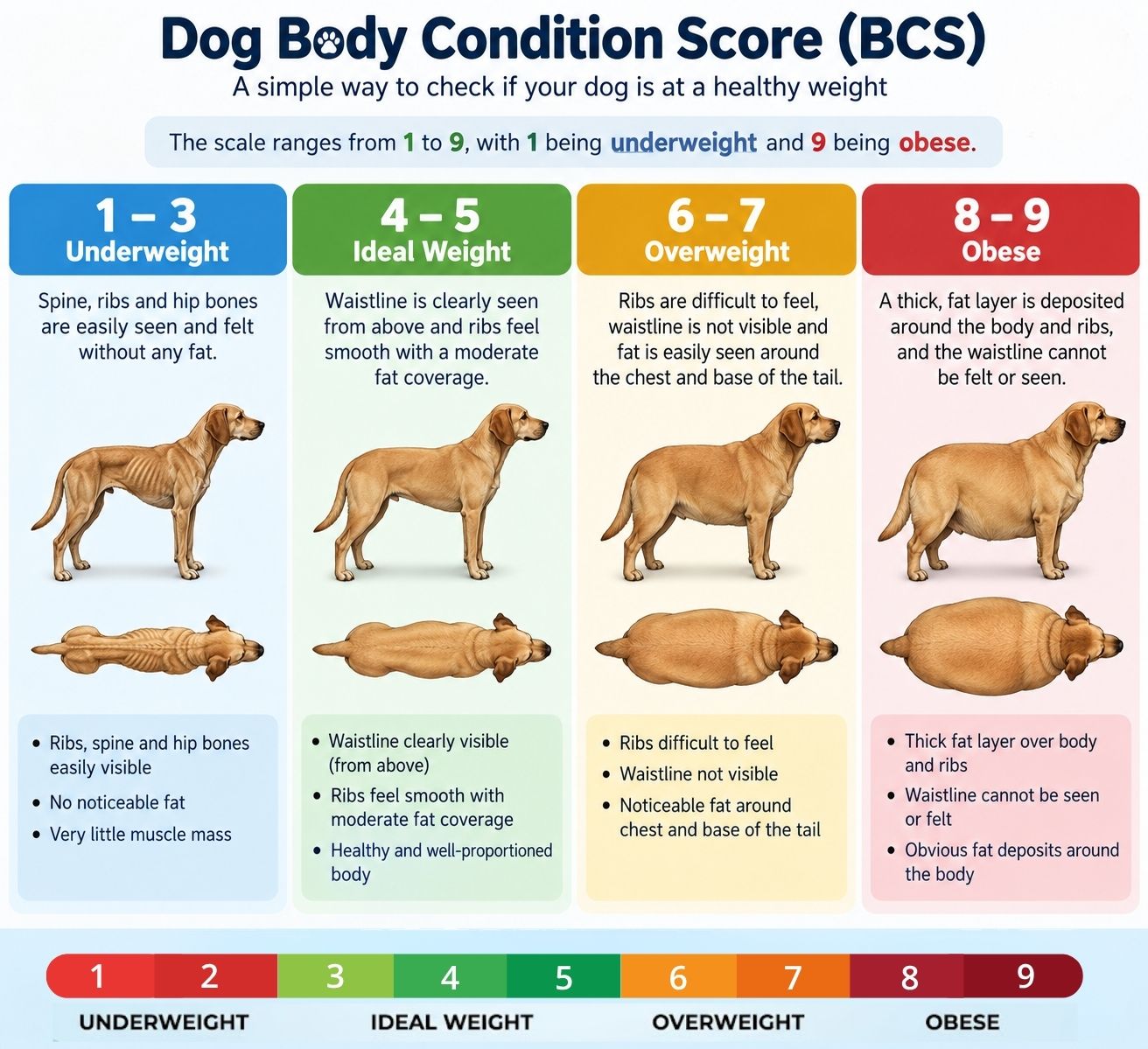
Body Condition Score (BCS)
The scale ranges from 1 to 9, with 1 being underweight and 9 being obese.
A score between 1 & 3 is considered underweight. It is when the spine, ribs and hip bones are easily seen and felt without any fat.
A score of 4 to 5 is seen as ideal weight, where the waistline is clearly seen when viewed from above and ribs feel smooth with a moderate fat coverage.
The score between 6 & 7 is considered overweight. This is where the ribs are difficult to feel, the waistline is not visible and fat is easily seen around the chest and base of the tail.
When the scale shows 8 or 9, it is considered obese. This is where a thick, fat layer is deposited around the body and ribs, and the waistline cannot be felt or seen.
Weight
Different weights determine whether a dog is healthy, underweight or obese, ranging from 50 lbs to over 60lbs.
When a dog weighs <50 lbs, they are considered underweight. However, a dog is healthy or at an ideal weight if their weight ranges between 50-55 lbs. But if the weight ranges between 55-60 lbs, they are considered overweight and when a dog weighs >60 lbs, it is considered obese. For instance, if a dog weighs more than 20% of their ideal weight, it is obese. However, these ranges vary according to the breed and size of the dog.
Signs Of Obesity In Dogs
Here are a few common signs that indicate your dog might be obese and needs proper care and attention:
- Difficulty walking
- Lethargy or weakness
- Heavy panting
- Struggling to jump or climb stairs
- Reluctance to exercise
- Increased sleeping
- Fat deposits around the neck, chest and base of the tail
- Non-noticeable tuck in the abdomen
- Difficult to feel ribs, spine and hip bones
- Invisible waistline when viewed from above
What Are The Reasons For Dog Obesity?
Obesity in dogs can be caused by multiple reasons, which are mentioned below:
- Lack of exercise
- Aging
- High-fat, low-fiber diet
- Hypothyroidism
- Overeating
- Certain treatments
- Genetics
- Excessive intake of treats
- Neutering or spaying
- Breed type (Golden retriever, Cocker spaniel, Beagle, German shepherd, Shih Tzu, Mixed breeds, etc.)
Diseases Caused By Obesity In Dogs
Obesity can lead to various health conditions in dogs that can be fatal if left unattended:
- Diabetes mellitus
- Arthritis or joint-related issues
- Heart diseases
- Hypertension
- Cancer
- Respiratory problems
- Pancreatitis
- Kidney & liver dysfunction
- Metabolic disorders
- Compromised immune health
- Anesthetic risks
- Skin infections
[Also Read] Common Myths About Dog Weight
Tips To Manage Obesity In Dogs
Let’s have a glance at the ways through which you can control obesity and keep your canine healthy:
1. Weight Management
A healthy weight is an indicator of a fit dog. Other than the fact that your dog is suffering from any a pre-existing health condition directly impacts weight gain or loss. Therefore, you should keep an eye on their weight and if you notice any sudden changes, consult the veterinarian immediately.
2. Regular Physical Activity
Physical activities, such as walking, running or swimming ensure a healthy mind and a fit body. An active lifestyle contributes a lot in preventing potential diseases and keeping your furball’s weight in check. You can consider playing fetch or hide and seek with your dog for moderate physical activity. Focus on increased activity along with a low-calorie diet for obese dogs to reduce weight quickly.
3. Fixed Feeding Portion And Timing
Sticking to portion control and fixed meal timings not only prevents obesity but also ensures good digestive health, better toilet habits and reduced scrounging behavior. Consider feeding puppies 4-5 times a day and 2 meals a day for an adult.
4. Cut Down On Treats
Although treats are a great option for positive reinforcement, training or enrichment, they should only comprise 10% of your canine’s daily calorie intake as they add up to weight gain quickly. For obese dogs, complete elimination of treats is recommended.
5. Breed & Age Specific Diet
It is essential to feed your furry friend a diet considering their breed and age, as it aids in managing a healthy weight without compromising on their nutritional requirements. Certain breeds are more prone to obesity compared to others, so they should be fed accordingly. On the other hand, the calorie requirements of puppies and dogs vary with their age and size. Hence, always pick the food according to the breed and age of your dog. Consult the veterinarian for a tailored diet chart to ensure the health and vitality of your beloved companions.
Bottom Line
Obesity in dogs is a common yet serious problem that can lead to a range of health conditions. But the good news is, with a little effort and right approach; it can be managed and prevented. Educate yourself on everything related to obesity so that you can take necessary steps on time and add more years, along with quality, to your dog’s life. Don’t forget to consult the veterinarian for tailored recommendations regarding diet, weight management, exercise, etc. Happy parenting!