
Pet parents are well-aware of the dangers that fleas bring with them. And, flea-borne diseases are one of them. Learning about fleas and the diseases caused by them helps you stay a step ahead in the game of preventing them.
4 Common Flea-Borne Diseases in Dog
1. Flea Allergy Dermatitis
Flea Allergy Dermatitis is basically an allergic response caused by flea bites. When fleas bite dogs, they leave their saliva on the skin. This saliva contains histamines and amino acids which triggers an allergic response that results in skin irritations and itching. When your pet scratched to relive himself, it results in more allergic reactions.
Symptoms
- Skin irritation
- Excessive itching
- Red patches
- Small bumps
- Skin infections
Diagnosis
This flea-borne illness can sometimes be identified by at your pet visually. To do this, check for fleas, look for regions with redness, raised bumps, or inflammation. In order to determine whether your dog is hypersensitive to a particular flea strain, your veterinarian may also do an intradermal test using particular flea saliva strains.
Treatment
The ideal way to treat Flea Allergy Dermatitis is to get rid of the flea infestation itself. This can be done by using a suitable flea treatment suggested by your veterinarian. In case of skin infections, your veterinarian may also prescribe antibiotics to relieve irritation and pain.
2. Tapeworm Infestations
Flea tapeworm infestations occur when dogs accidentally swallow fleas infected with tapeworms while licking or grooming their fur. When these fleas reach the digestive system, the tapeworms inside them attach themselves to the intestinal lining and cause infestations.
Symptoms
- Vomiting
- Anemia
- Abdominal pain
- Weight loss
- Visible tapeworms in feces
Diagnosis
The presence of tapeworms can be confirmed by their presence in the stool. The microscopic examination of your dog’s stool may also give an idea about the number of eggs and larvae present, and hence, the severity of the infestation.
Treatment
Tapeworm treatment is simple with the deworming products available in market today. These treatments are available in the form of tablets, oral suspensions, or injections. Once the drug begins to work, the tapeworms present in the intestine dies and won’t be visible in the feces anymore.
3. Bartonellosis
Also known as cat-scratch disease, Bartonellosis is equally common in dogs too. Infections with the bartonella bacteria in dogs have been connected to fleas, even though the source of the infection is less obvious in dogs than it is in cats.
Symptoms
- Fever
- Loss of appetite
- Vomiting/diarrhea
- Red eyes/pale gums
- Swollen lymph nodes
Diagnosis
Bartonella is a bacteria and the bacterial infection may be indicated by an increase in white blood cells. Sometimes, reduction of platelets may be also found. Hence, your vet may perform a full blood chemistry and urinalysis of your dog.
Treatment
A veterinarian may recommend bartonellosis treatment for a dog based on the severity and the clinical signs of the disease. A course of intensive antibiotics like amoxicillin in conjunction with fluoroquinolones is generally prescribed.
4. Anemia
Fleas consume the blood of their host animals through bites. A single flea may drink as much as 20 times its own body weight. This means that if your dog has a flea infestation, a considerable amount of blood may be lost. The condition of reduction of red blood cells is known as anemia.
Symptoms
- Weakness
- Lethargy
- Rapid heartbeats
- Shortness of breath
- Signs of blood loss (in stool, urine or from nose)
Diagnosis
Anemia in dogs can be easily detected with the clinical signs of the disease. However, a veterinarian may recommend a complete blood and urine analysis. The reduced number of RBCs in the blood confirms anemia in dogs.
Treatment
Depending on the amount of blood loss, a veterinarian may treat anemia with intravenous fluids, supplements, immunosuppressive drugs, etc. In severe cases, a blood transfusion or bone marrow transfusion may also be required.
6 Signs Your Dog Has Fleas
To save your dog from nasty fleas, it is important to know what to look for. Being aware of these 6 signs will help you take prompt action against fleas:
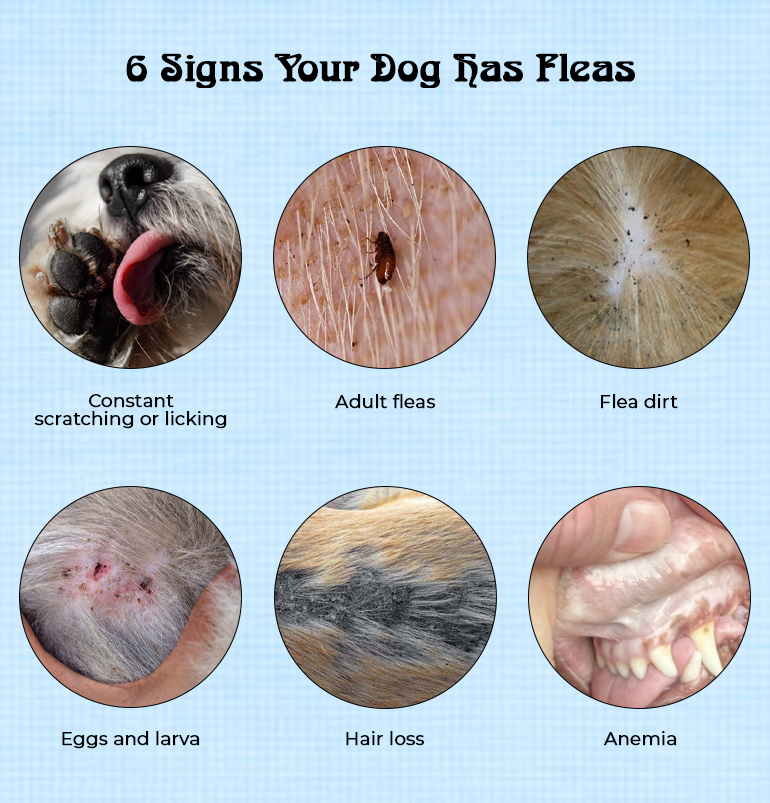
1. Constant scratching or licking:
Fleas bites are painful for dogs as they end up with your dog constantly scratching or licking himself. This is because flea saliva contains a protein that dogs are allergic to.
2. Adult fleas:
The most obvious sign of fleas on dogs is spotting adult fleas on your dog’s coat or in the surroundings. Adult fleas are tiny, brown insects that can be easily seen with naked eyes.
3. Flea dirt:
You’ll often find on your dog’s coat if they have fleas. Flea dirt is actually the feces of adult fleas, which indicates that fleas have been there on your dog for a while now.
4. Eggs & larva:
Flea eggs are off-white colored small eggs which are visible easily on careful examination. If you detect flea eggs, larva, or fleas you should immediately treat your dog.
5. Hair loss:
Hair loss is a typical adverse effect of flea bites. Pets scratch or bite themselves really hard due to itching and irritation. This may result in hair loss on its tail, hind legs, and lower back.
6. Anemia:
Fleas feed on the host’s blood as they bite. Too many fleas and flea bites may even cause excessive blood loss or anemia, which may lead to even more serious consequences.
Common Places to Look for Fleas
To confirm that fleas are the cause of your dog’s excessive scratching or licking, you should look for fleas on the following places on your dog.
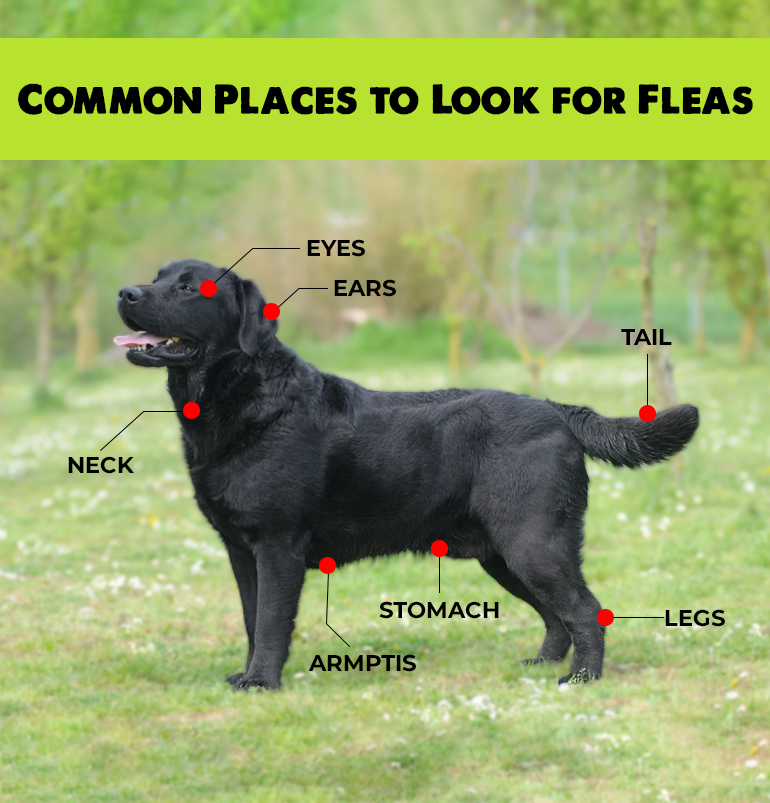
Fleas are most commonly found here:
- Behind your dog’s ears
- Around their eyes
- Around the neck
- Near their hind legs
- In their armpits or groin
- On stomach or abdomen
- At the base of their tail
If you detect fleas on your dog, you should contact your veterinarian immediately for finding the best suitable flea treatment for your dog.
How to Get Rid of Fleas on Dogs
Getting rid of fleas on your dog isn’t a cake walk. It requires a lot of patience and time. These are some of the ways to get rid of fleas from your dog and your home:
- Keep an eye on the signs of fleas
- Use flea shampoos, powders, and sprays
- Wash your pet’s bedding and toys often with warm, soapy water
- Vacuum carpets, upholstery, and furniture regularly
- Keep your pet up to date on flea prevention treatments